
Security Window Film for Mississauga Storefronts: A Retailer’s Guide to Break-In Season
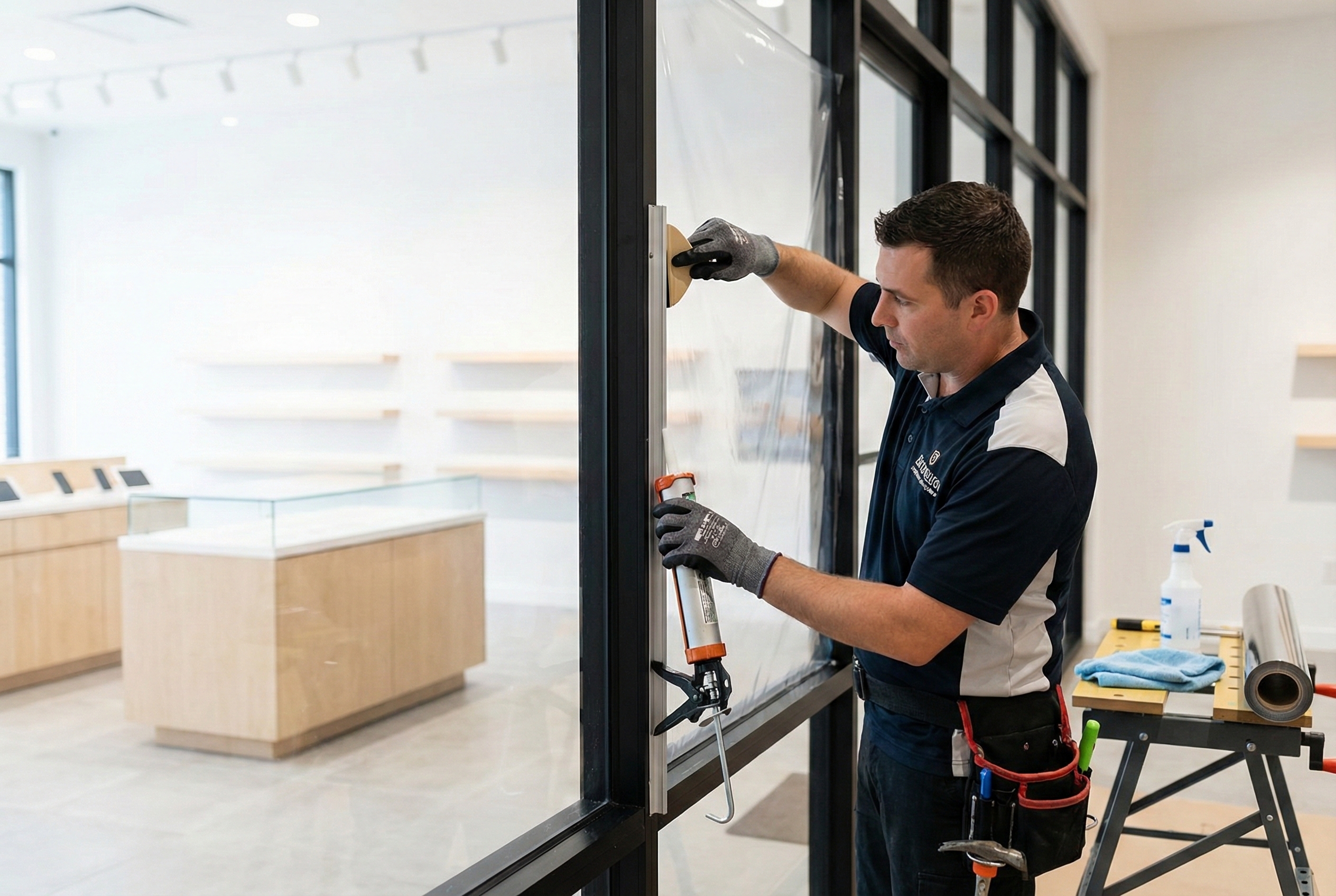
By late November, retail glass across Mississauga is doing two jobs at once. It shows off holiday stock to passing traffic, and it is the thinnest barrier between that stock and anyone willing to break it. Sunset comes before five o’clock for most of December, so plazas and main-street shops spend much of their trading day lit up against a dark parking lot, and many more hours closed with merchandise still visible through the window. That combination is why owners start asking about protective film at this time of year.
Security window film is one of the few upgrades that can be added to existing storefront glass without replacing it. Knowing what it really does, where it falls short and how it should be installed helps a retailer decide whether it belongs in the security plan, and how much of the shopfront to cover. It also helps owners judge the proposals they receive, because security film quotes can describe very different products and installation methods under the same name.
What Security Window Film Does to Storefront Glass
Security film is a clear, multi-layer polyester sheet bonded to the inside face of the glass with a strong pressure-sensitive adhesive. It does not stop glass from breaking. What it changes is what happens next. Untreated annealed glass breaks into long, sharp pieces that fall out of the frame, and tempered glass collapses into thousands of small cubes, leaving an open hole either way. With film applied, the broken pieces stay stuck to the film, so the pane tends to stay in place as a cracked but connected sheet.
For a thief, that difference matters. Instead of one strike and a clear opening, getting through filmed glass usually takes repeated blows to the same area, followed by cutting or tearing at the film. That takes time and makes noise, which is exactly what a smash-and-grab depends on avoiding. Film is best understood as a delay and a deterrent rather than a barrier. It buys time for an alarm to sound and for staff, neighbours or responders to react, and it can turn a fast grab into an attempt that is abandoned.
There is a safety side that retailers sometimes overlook. A storefront broken by a stray shopping cart, a vehicle misjudging the curb or a winter windstorm can shower an entrance with glass. Film keeps those fragments together, which reduces both the cleanup and the risk of injury to staff and customers walking past. A cracked pane that stays in its frame can also hold the opening closed until a glazier arrives, rather than leaving the store exposed overnight.
Film Thickness, Edge Attachment and the Glass Already in the Frame
Security films are sold by thickness, usually measured in mils, or thousandths of an inch. Thinner safety films are designed mainly to hold broken glass together, while thicker security grades add resistance to repeated impact. Thicker is not automatically better for every opening. A heavier film on a large pane is stiffer to install and, on some glass types, raises questions about heat absorption and thermal stress, which an installer should check against the film manufacturer’s compatibility guidance.
The weak point of a filmed window is often the edge rather than the glass. If the film stops at the visible glass and the frame grips only a narrow strip, a determined intruder can push the whole broken sheet out of the frame in one piece. Edge attachment systems address this. A common approach is a structural silicone bead that bonds the film to the frame, while mechanical systems use profiles fastened to the frame that clamp the film edge. For a busy entrance or a display window full of high-value stock, the attachment can matter as much as the film itself.
The existing glass makes a difference too. Plaza units often have tempered glass in and around the doors, older storefronts may have annealed glass in the large display panes, and newer buildings frequently use sealed insulated units. Film goes on the interior surface in each case, but the right product and attachment method depend on what is already in the frame, which is why a site survey should come before any quote.
Doors, Sidelights and the Openings Targeted First in Mississauga Plazas
Not every pane on a shopfront carries the same risk. Glass doors and the narrow sidelights beside them are frequent targets, because breaking a small panel next to a lock or panic bar may be enough to reach through and open the door. Display windows holding electronics, jewellery, designer clothing or tools come next, since the goods are visible and close to the glass. Rear and side doors facing a laneway or loading area deserve attention as well, because they sit out of sight of the main road.
A sensible plan ranks the openings by exposure and by the value behind them. Some businesses film the entrance and display windows first and add the remaining glass later, while others treat the whole frontage at once for a consistent appearance. Either way, the conversation should cover how the doors are used. Film on a door that takes hundreds of pushes a day needs clean, well-finished edges near the hardware, and push plates, hours signage and decals should be planned around the film rather than stuck over it.
Pairing Security Film With Alarms, Lighting and Display Habits
Film works best as one layer in a broader plan. Good exterior lighting and a clear view into the store from the street remove some of the cover a thief relies on. Door contacts and motion sensors still do their job behind filmed glass, but retailers who use acoustic glass-break detectors should ask their alarm provider whether the detectors need testing or adjusting, since filmed glass may not break with the same sound as an untreated pane. Cameras covering the storefront and the parking area help after the fact.
Display habits matter just as much. Moving the most valuable items away from the window overnight, or leaving only empty boxes and signage on show, takes away the reason for a quick grab. Film also has limits that should be stated plainly. It will not stop a vehicle driven into the frontage, it does not make glass bulletproof, and a person with enough time and tools can still get through. Where ram-raids are a genuine concern, bollards or heavy planters in front of the glass are the measure that addresses that risk.
Scheduling Storefront Film Around Holiday Trading Hours
Most retailers do not want installers working in the window during peak shopping hours, so commercial film work is commonly scheduled early in the morning, in the evening or on a closed day. Storefront film is applied from inside, which means display platforms, shelving and signage near the glass have to be cleared for the crew. Booking before stock levels peak is easier than squeezing the work into mid-December, when moving a window display costs real selling time.
Film is applied over a water-based mounting solution, and that moisture has to evaporate through the film before the adhesive reaches full strength. In cold, grey weather the drying period is slower, and a slight haze or a few small water pockets can remain for longer than they would in summer. This is normal and clears as the film cures, but the glass should not be cleaned or have decals applied during the period the installer specifies. Silicone used for edge attachment also needs its own curing time.
Many Mississauga storefronts sit in managed plazas and malls, from the City Centre area around Square One to Heartland, Erin Mills and Meadowvale, and along the main streets of Port Credit and Streetsville. Leases often require the landlord’s or property manager’s approval for changes to storefront glazing, and some centres set rules on how film may look and when contractors can work. Getting that approval early avoids a delayed install.
Questions to Ask Before Hiring a Mississauga Installer
Retailers comparing quotes for security window film in Mississauga should put the same questions to each company so the answers can be compared fairly. Which film thickness is proposed for each opening, and why? Is an edge attachment system included, and on which openings? Has the film been checked for compatibility with the existing glass type and size? What does the warranty cover on commercial glass, and for how long? Who carries out the installation, and can it be done outside trading hours?
A good proposal names the film product, shows which panes are covered, describes the attachment method and explains the curing period. It should also be honest about what the film will and will not do. A vendor that promises unbreakable glass or guaranteed insurance savings is overselling. Whether an insurer views film favourably depends on the policy, so that is a conversation for the broker rather than a promise to accept from an installer. Handled properly, security film is a practical, low-disruption way to make a storefront harder to break into during the darkest weeks of the year, and it keeps working long after the holiday displays come down.