
Why Tallow Balm Is Having a Moment in Natural Skincare
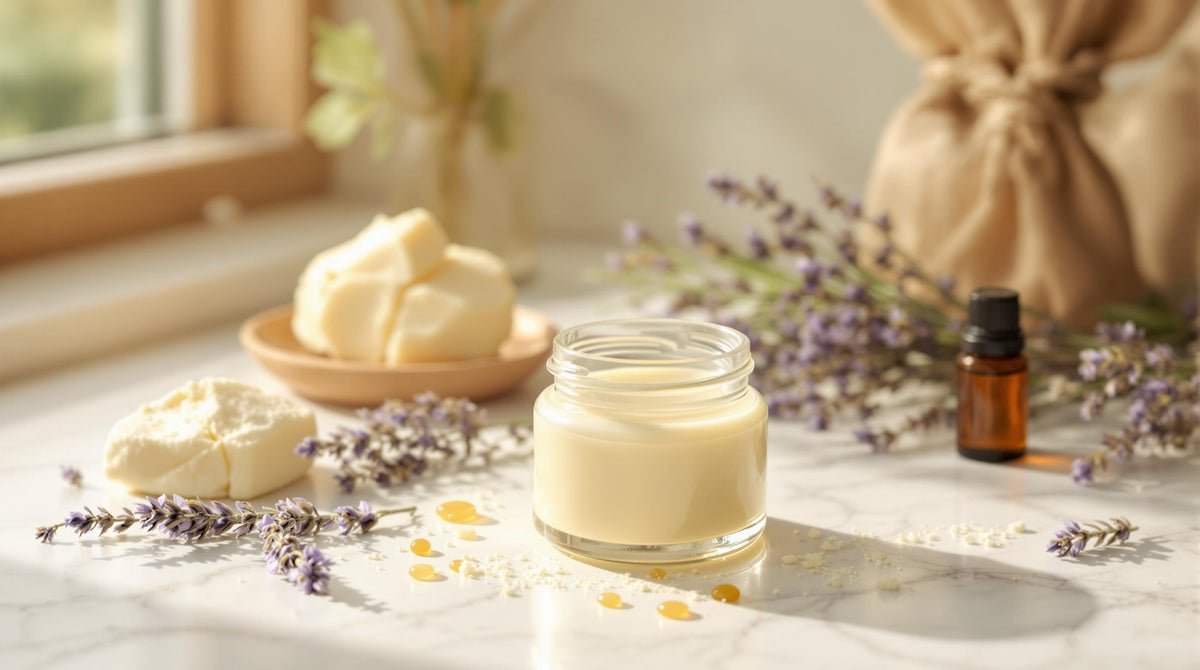
Scroll through any skincare conversation online right now and you’ll eventually run into it: tallow balm, an ingredient that would have sounded more at home in a grandmother’s kitchen than a beauty routine a decade ago. Yet grass-fed tallow has quietly become one of the most talked-about ingredients in the natural skincare space, championed by people frustrated with long, hard-to-pronounce ingredient lists and looking for something simpler. Here’s what’s actually behind the trend, and what’s worth understanding before trying it.
What Is Tallow Balm?
Tallow balm is a skin moisturiser made primarily from rendered animal fat — traditionally beef fat, and ideally sourced from grass-fed, pasture-raised cattle. The rendering process, where raw fat is gently melted down and strained, removes impurities and leaves behind a stable, shelf-stable fat that can be whipped or blended with a small number of complementary ingredients, such as a carrier oil or essential oil, to create a balm-like texture. It’s a genuinely old technique — rendered animal fats have been used in skincare for centuries across many cultures — that’s simply being rediscovered by a generation more sceptical of synthetic formulations than the one before it.
Why It’s Making a Comeback Now
Part of the renewed interest comes down to a broader shift in how people think about what they put on their skin. As awareness has grown around ingredient lists in conventional moisturisers — preservatives, synthetic fragrances, emulsifiers, and fillers that can run into the dozens on a single label — more people are actively seeking products built around a small number of recognisable, minimally processed ingredients. Tallow balm fits that appetite well: a well-made product often lists only two or three ingredients, tallow chief among them.
There’s also a compositional argument that keeps coming up in conversations about tallow. Animal fat’s lipid profile is often described as closer to the composition of human skin’s own natural oils than many plant-based oils, which is part of why proponents say it tends to absorb readily without feeling heavy or greasy once worked in properly.
What’s Actually in a Good Tallow Balm
Quality varies significantly between products, and the source of the tallow matters. Grass-fed, pasture-raised tallow is generally considered the gold standard, both for the animal’s welfare and because grass-fed fat tends to carry a richer nutrient profile than fat from grain-finished animals. Beyond the tallow itself, a well-formulated balm typically includes only a small number of complementary ingredients — a light carrier oil to adjust texture, and sometimes a natural essential oil for scent — rather than a long list of fillers, synthetic fragrances or preservatives.
This is one of the more useful things to check before buying: a short, recognisable ingredient list is generally a good sign, while a tallow balm padded out with unfamiliar synthetic additives has arguably missed the point of choosing it in the first place.
Who Tends to Reach for It
Tallow balm has found a particularly enthusiastic audience among people with sensitive or reactive skin, who often report fewer issues with a simple, minimally processed formula than with conventional moisturisers containing multiple active ingredients and preservatives. It’s also popular with people managing dry or compromised skin barriers, since a rich, occlusive balm can help lock in moisture during colder months or in dry climates. That said, as with any skincare product, individual results vary, and anyone with a known allergy or particularly reactive skin should patch-test a new product before applying it more broadly.
How to Use It
Tallow balm is typically applied sparingly to clean, slightly damp skin, since a small amount goes a long way and warms quickly against body heat. Many people use it as a face and body moisturiser, while others reach for it specifically for drier areas — hands, elbows, heels, or lips — where a richer, more occlusive product tends to perform best. Because it’s a solid balm at room temperature rather than a liquid lotion, it’s worth warming a small amount between the fingertips before applying, which helps it spread evenly rather than sitting on the surface of the skin.
What to Look for When Choosing a Tallow Balm
- Grass-fed, pasture-raised source rather than grain-finished or unspecified origin
- A short, recognisable ingredient list without synthetic fillers or fragrances
- Clear information about how the tallow was rendered and sourced
- A texture and scent that suit your personal preference, since formulations do vary between makers
Getting Started
For anyone curious enough to try it themselves, starting with a well-made, grass-fed Tallow Balm is the simplest way to see what the fuss is about — a single, minimally processed ingredient doing a job that a long list of synthetic ones is often brought in to do instead.