
Clinical Pilates for Lower Back Pain: What the Evidence Says and What to Expect
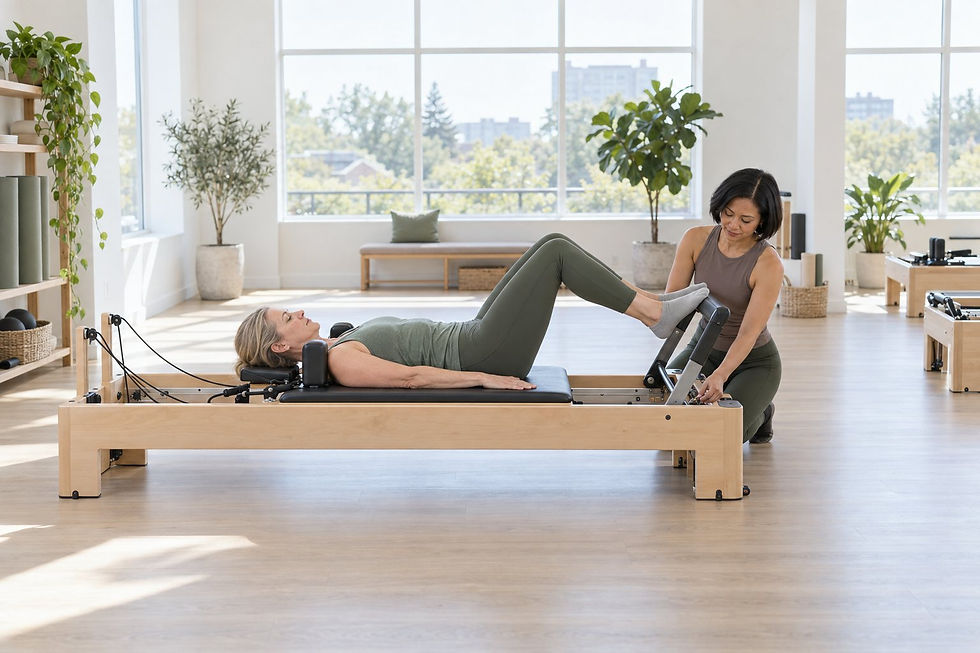
Lower back pain can affect the way you sit, sleep, work, exercise and manage ordinary daily activities. When symptoms persist or keep returning, it is common to become cautious about movement. However, carefully selected exercise is now considered an important part of managing many forms of ongoing lower back pain.
Clinical Pilates for lower back pain is a physiotherapist-guided form of exercise that can be adjusted to suit a person’s symptoms, movement capacity and rehabilitation goals. Research suggests Pilates may reduce pain and disability in people with persistent non-specific lower back pain, although it is not necessarily better than every other form of structured exercise.
Its main value lies in individual assessment, appropriate exercise selection and gradual progression.
Quick answer: Can Clinical Pilates help lower back pain?
Clinical Pilates may help some people with persistent or recurring lower back pain improve their movement, strength, physical function and confidence. It is generally most useful when exercises are chosen following a physiotherapy assessment and progressed according to the person’s response.
The World Health Organization emphasises that care should be tailored to the individual rather than relying on one treatment in isolation.
What is Clinical Pilates?
Clinical Pilates combines traditional Pilates principles with physiotherapy assessment and exercise rehabilitation. It may involve mat exercises as well as spring-loaded equipment such as a Reformer or Trap Table.
The resistance provided by this equipment can be altered to suit different levels of strength, movement and control. Exercises can also be performed in different positions, allowing the program to be adapted as a person’s capacity changes.
Unlike a general fitness class, physiotherapist-led Pilates for back pain usually begins with an assessment. This may consider:
- The location and behaviour of the pain
- Movements or activities that aggravate symptoms
- Spinal, hip and lower-limb mobility
- Strength and movement control
- Previous injuries or health conditions
- Work, sport and everyday activity requirements
- The person’s goals and confidence with exercise
The program can then be adjusted rather than applying the same sequence of exercises to everyone.
What does the evidence say?
Research supports exercise as a useful part of care for chronic lower back pain. A 2023 systematic review found that structured exercise programs probably reduce pain and functional limitations in adults with chronic primary lower back pain.
A Cochrane review found low- to moderate-quality evidence that Pilates was more effective than minimal intervention for pain and disability. When compared with other forms of exercise, however, the differences were generally small.
A more recent systematic review also concluded that Pilates can reduce lower back pain, although differences in program design, supervision, frequency and participant characteristics make it difficult to identify one ideal approach for everybody.
In simple terms, the evidence suggests:
- Pilates can be better than remaining inactive or receiving minimal intervention.
- It may improve pain, disability and physical function.
- It is not a guaranteed cure.
- It is not consistently superior to every other well-designed exercise program.
- Individualisation, supervision, progression and consistency may influence results.
This is why individual Clinical Pilates for chronic back pain may be more appropriate than following a generic online routine when pain is persistent, complex or easily aggravated.
Clinical Pilates compared with regular Pilates
| Regular Pilates | Clinical Pilates |
| Usually designed around general fitness | Designed around rehabilitation and function |
| Commonly led by a Pilates instructor | Guided by a physiotherapist or appropriately trained clinician |
| Exercises may be similar across a group | Exercises are selected for the individual |
| Medical and injury assessment may be limited | Begins with a relevant physical assessment |
| Progression follows the class format | Progression follows symptoms, capacity and goals |
| May suit otherwise healthy participants | May suit people managing pain or returning from injury |
Neither approach is automatically right or wrong. A general class may suit someone who is comfortable exercising and has no significant injury concerns. Clinical Pilates provides additional assessment and modification for people who require a more individual approach. Check out this detailed explanation in Pilates vs Clinical Pilates.
What happens at the first session of Clinical Pilates?
1. Assessment
The physiotherapist will discuss the symptoms, health history, current limitations and goals. They may assess spinal and hip movement, strength, balance, control and relevant daily tasks.
2. Explanation
The assessment findings should be explained in clear language. This includes discussing which activities are currently manageable and how exercise may form part of the treatment plan.
3. Exercise selection
The initial exercises are chosen according to the assessment. A session may include breathing, spinal movement, hip strengthening, lower-limb exercises, trunk control or whole-body movements.
4. Equipment introduction
When appropriate, the physiotherapist may introduce the Reformer or Trap Table. The springs can provide either assistance or resistance, depending on the exercise and rehabilitation goal.
5. Gradual progression
As movement becomes easier, exercises may be progressed by changing resistance, position, range, repetitions or complexity. Progress should be based on function rather than simply making every exercise harder.
For people with persistent symptoms, reduced confidence or a history of flare-ups, a personalised lower back pain exercise program can provide a more measured way to restore movement and return to normal activities. The appropriate program will depend on the person, the nature of the back pain and the activities they need to regain.
When should back pain be medically assessed?
Most lower back pain is not caused by a serious condition, but some symptoms require prompt medical attention.
Seek medical care for concerning or persistent symptoms. Emergency assessment is particularly important when back pain is accompanied by loss of feeling or movement in the limbs, or problems controlling the bladder or bowel.
Arrange an assessment if there is:
- New or increasing leg weakness
- Numbness or altered sensation
- Pain following a significant fall or accident
- Unexplained fever, illness or weight loss
- Severe pain that is rapidly worsening
- Pain that does not improve over several weeks
Call Triple Zero on 000 for loss of bladder or bowel control, loss of movement, or another medical emergency.
Frequently asked questions
Is Clinical Pilates suitable for chronic lower back pain?
It may be suitable for many people with non-specific lower back pain lasting longer than three months. Suitability depends on the cause of the symptoms, current capacity and any associated health conditions.
Do I need Pilates experience?
No. A clinical program can begin with basic movements and low resistance. The exercises should reflect the person’s ability rather than previous Pilates experience.
How often should I attend?
Frequency varies according to the assessment, goals and overall management plan. Research and guidelines support structured, progressive exercise, but there is no single schedule that is appropriate for everyone.
Is Clinical Pilates only about core strength?
No. Although trunk strength and control may form part of the program, lower back rehabilitation can also involve the hips, legs, balance, mobility, breathing and whole-body movement. Back pain is rarely addressed by strengthening one muscle in isolation.
How quickly will symptoms improve?
Recovery times vary. Some people notice changes in movement or confidence within several sessions, while persistent symptoms may require a longer period of gradual rehabilitation. Consistency and appropriate progression are generally more useful than expecting an immediate result.