
Annex 1 Environmental Monitoring Checklist for Australian Pharmaceutical Cleanrooms
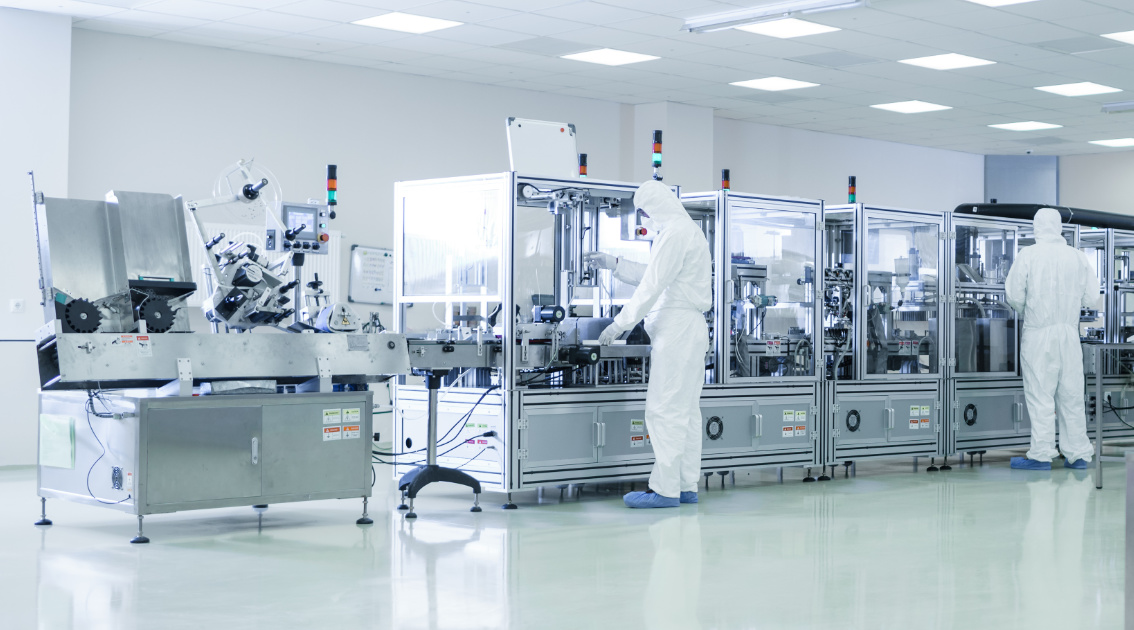
Since 1 March 2026, Australian sterile manufacturers are expected to comply with the updated PIC/S Annex 1 requirements in full. For environmental monitoring, that means more than collecting particle and microbiological data. It means showing that monitoring sits within a documented Contamination Control Strategy (CCS), reflects real contamination risks, and supports batch certification, release decisions, investigations, and periodic review.
For many facilities, the issue is not whether monitoring exists. It is whether the programme is connected, risk-based, and capable of demonstrating control in the way Annex 1 now expects. A practical checklist can help sites test whether their current approach is fit for purpose.
Start with the CCS, not the sensors
The first question is simple: does your environmental monitoring plan reflect the actual contamination risks of the process? Annex 1 is not asking sites to collect data for its own sake. It expects them to understand where contamination could enter the product, where risk is highest, and which controls matter most.
That means reviewing the process before reviewing the hardware. Interventions, personnel movement, airflow patterns, material transfers, utilities, cleaning, disinfection, and cleanroom grade transitions all need to be considered. Only then can a site decide what should be monitored continuously, routinely, or periodically.
Check whether your key data streams are connected
A common weakness is fragmentation. Pressure, temperature, humidity, viable monitoring, non-viable particle counts, and equipment status may all be recorded, yet stored in different systems or reviewed in isolation. That makes it harder to trend performance, detect patterns, and support batch review efficiently.
A stronger monitoring strategy defines how data is collected, reviewed, trended, and escalated. It should be clear who reviews results, what triggers investigation, how data supports batch release, and how recurring issues feed back into the CCS. Where continuous oversight or centralised review is needed, an environmental monitoring platform can make that process more manageable.
LAF Tech’s EMS portfolio includes Lighthouse’s LMS Pharma and LMS Express, along with Vaisala’s viewLinc Cloud or Enterprise system, each with its own unique advantages. Perfect for data acquisition, reporting, alarms, calibration, and validation. The right system depends on whether the application is a high-risk GMP manufacturing area, a support space, or a less critical utility or storage environment.
Review Grade A and Grade B expectations carefully
Grade A and Grade B areas deserve specific attention because Annex 1 sets a higher operational expectation in these spaces. Monitoring is not just about routine sampling points. It must reflect what actually happens during setup, operation, and intervention.
For Grade A, continuous viable air monitoring should run for the full duration of critical processing, including aseptic setup and critical operations. Any microbial growth in Grade A should trigger investigation. In both Grade A and Grade B areas, recovered microorganisms should be identified to species level and assessed for their impact on the batch and on the overall state of control.
That means the monitoring plan should cover timing, duration, intervention periods, recovery workflows, identification, and escalation criteria. Where viable air monitoring capability needs to be strengthened, a solution such as the Lighthouse ActiveCount 100H may be relevant for critical spaces and aseptic processes. For non-viable monitoring, the right choice may be handheld, remote, or fixed particle counting depending on whether the task is qualification, spot checks, or ongoing monitoring.
Make trending useful, not decorative
Trending is easy to mention and harder to do well. Good trending does more than produce graphs. It should help the site recognise increasing excursions from alert or action levels, repeated alert-level events, isolated action-level events with a possible common cause, and shifts in microbial flora that may indicate a loss of control.
The real value comes from interpretation. Does a room behave differently in operation than at rest? Do certain interventions repeatedly increase counts? Are counts affected after maintenance, shutdown, or cleaning changes? Those are the questions that turn monitoring data into process knowledge.
This is also where calibration and validation matter. A trend is only as reliable as the instruments, sample locations, and review workflow behind it. LAF Tech supports environmental monitoring programmes with NATA-accredited testing and calibration, documented validation, installation support, and ongoing maintenance, helping facilities keep the data both usable and defensible.
Confirm that airflow, transfer, and interventions are reflected
Environmental monitoring should not sit apart from facility qualification and aseptic process design. If airflow visualisation studies, transfer practices, glove integrity, or intervention design point to a contamination risk, the monitoring plan should reflect that risk directly.
In practice, this is often the difference between a programme that exists on paper and one that genuinely supports aseptic assurance.
A sensible next step
For most Australian sterile facilities, the best next step is not to buy more devices immediately. It is to review the CCS, map current monitoring against actual contamination risks, identify where data is fragmented or weak, and then decide which combination of procedures, qualification work, and monitoring technology will close the gap cleanly.