
Why Pharmaceutical Labs Need Continuous Particle Monitoring
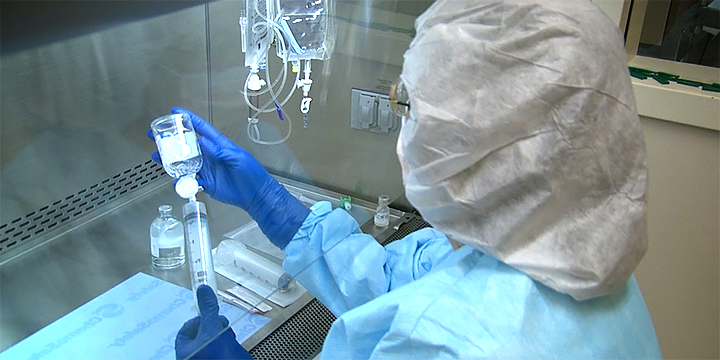
Pharmaceutical labs work with products where small changes can carry large consequences. A visible spill is easy to notice. Airborne contamination is not. Particles from people, packaging, equipment, clothing, cleaning materials and process movement can enter clean areas long before anyone sees a problem. That is why pharmaceutical particle monitoring has moved from a compliance task to daily contamination control.
EU GMP Annex 1 places strong emphasis on contamination control strategy, cleanroom monitoring, alert limits and action limits for viable and non-viable particles, especially in sterile manufacturing areas. ISO 14644 also sets the basis for cleanroom classification by airborne particle concentration.
Key takeaways
- Continuous particle monitoring gives pharmaceutical labs a live view of airborne contamination risks, rather than relying only on scheduled spot checks.
- It supports GMP compliance, contamination control, batch investigations and cleaner decision-making.
- Particle data helps teams link contamination spikes to real activities, such as door openings, operator movement, material transfer or equipment faults.
- The best systems are designed around process risk, not just room layout.
- For Australian pharmaceutical and laboratory facilities, local support, calibration, validation and reporting capability matter as much as the instrument itself.
A clearer view of invisible risk
Pharmaceutical labs depend on controlled spaces. Airflow, pressure, gowning, cleaning and equipment all work together to protect products from contamination. Yet even a well-designed cleanroom is not risk-free. People shed particles. Packaging creates dust. Doors open. Trolleys move. Filters age. A small rise in airborne particles may not be visible, but it can still affect process control.
That is why pharmaceutical particle monitoring has become a practical part of modern contamination control. It helps labs see what is happening in real time, especially when products are exposed or sensitive work is underway.
Why scheduled checks are not enough
Traditional particle checks are useful, but they only show conditions at selected moments. A cleanroom may pass a routine test at 9 am and still experience a short contamination event at 10.15 am. If no one is monitoring at that point, the event may disappear from view.
Continuous monitoring fills that gap. It tracks particle levels during normal operations, so quality teams can see patterns rather than isolated readings.
This matters because particle spikes often connect to ordinary activities:
- Operators entering or leaving a room
- Materials being unpacked or transferred
- Cleaning tasks disturbing settled particles
- Equipment starting, stopping or vibrating
- Pressure changes between connected spaces
- Poor gowning technique or repeated interventions
A spot check can confirm a room’s condition at one point in time. Continuous monitoring shows how the room behaves while work is actually happening.
How continuous monitoring supports GMP expectations
GMP does not only ask whether a cleanroom looks clean. It asks whether the facility can prove that controlled conditions were maintained. FDA also highlights the need for monitoring and control in aseptic environments, especially where sterile products are exposed.
Reliable particle data helps labs answer quality questions:
- Was the cleanroom stable during production?
- Did particle levels rise during a specific intervention?
- Were alert or action limits exceeded?
- Did the team respond quickly and record the event?
- Is the same issue repeating across shifts or batches?
These answers help during deviation reviews, audits and batch release decisions. They also help teams move from blame to evidence. Instead of guessing why a result changed, they can review time-stamped data and identify likely causes.
Better data leads to better decisions
Continuous cleanroom contamination monitoring is not just about collecting more numbers. The real value comes from making cleanroom behaviour easier to understand.
Good monitoring can help labs:
- Spot early warning signs before a major failure
- Compare cleanroom performance across shifts
- Check whether cleaning routines are working
- Identify weak points in gowning or material transfer
- Review whether maintenance has improved conditions
- Support staff training with real examples
There is also a cultural benefit. When teams can see the effect of their actions, cleanroom discipline becomes more concrete. A poorly timed door opening or unnecessary movement is no longer an abstract risk. It appears in the data.
Where continuous monitoring adds the most value
Not every room needs the same level of monitoring. The strongest case is usually in areas where product exposure is high, contamination risk is harder to control or compliance expectations are strict.
Common priority areas include:
- Aseptic filling zones
- Sterile compounding rooms
- Isolators and barrier systems
- Radiopharmaceutical facilities
- Biologics and cell therapy laboratories
- Critical transfer points
- Clean corridors linking controlled rooms
Choosing the right system
Before labs buy particle monitoring systems, they should start with a risk assessment.
A useful selection checklist includes:
- Which rooms or process points are most critical?
- Should monitoring be fixed, portable or both?
- What particle sizes need to be counted?
- How will alarms be set, reviewed and escalated?
- Can the software produce audit-ready reports?
- Is calibration and service support available locally?
- Will the system fit the site’s contamination control strategy?
The best system is one that staff can use confidently. Clear alarms, reliable reporting and proper support matter just as much as sensor performance.
Frequently Asked Questions:
What is continuous particle monitoring in pharmaceutical labs?
It is the ongoing measurement of airborne particles in controlled areas. It helps quality and production teams detect contamination trends while work is taking place, rather than only after scheduled sampling.
Why is particle monitoring needed in cleanrooms?
Cleanrooms control contamination, but they do not remove all risk. Monitoring shows whether airborne particle levels remain within expected limits during real activities such as filling, transfer and cleaning.
Is continuous monitoring required for every pharmaceutical lab?
Not always. The need depends on product risk, cleanroom grade, process type and regulatory expectations. Sterile and high-risk operations usually gain the most value from continuous data.
What is the difference between viable and non-viable particles?
Viable particles contain living microorganisms. Non-viable particles are not living, but they can still signal poor control, process disturbance or conditions that may support contamination.
How does particle data help during audits?
It gives auditors clear evidence of monitoring, alarm review, trend analysis and corrective action. Well-organised data can show that the lab understands and controls its cleanroom conditions.
Final thought
Continuous particle monitoring gives pharmaceutical labs something they cannot get from occasional checks alone: context. It shows when particle levels changed, where the change happened and what was occurring at the time. For labs that need clean, stable and well-documented environments, that visibility is a sound investment in product quality and patient safety.